Lower Back Fat & Love Handles: A Plastic Surgeon's Treatment Guide
Published by Reza Nassab
Medically reviewed: Last reviewed by Mr Reza Nassab, FRCS Plast —
Lower back fat — often called "love handles," "back rolls," or "back bulge" — is one of the most common concerns I hear in consultations. Patients have typically already tried diet and exercise, often for years, and found that this particular area simply will not budge. There is a physiological reason for that, which I will explain below.
This article covers the anatomy of lower back fat, what conservative measures can realistically achieve, and when a surgical or medical treatment becomes the appropriate option. As a Consultant Plastic Surgeon who regularly performs back liposuction, VASER liposuction, and BodyTite in Manchester, I will give you an honest clinical picture — not generic fitness advice.
The Back Fat Zones: What You Are Actually Dealing With
The back is not a single fat compartment. There are distinct zones, each with different fat characteristics, and each best addressed in a specific way. Understanding which zone concerns you most is the starting point for any treatment discussion.
Upper Back
Fat above and around the shoulder blades. Often pronounced in women and exacerbated by bra straps. Dense, fibrous fat — VASER is particularly effective here.
Bra Strap Area
The mid-back roll visible under a bra band. Often a discrete, isolated bulge that responds well to targeted liposuction with minimal downtime.
Lower Back / Flanks
The "love handle" zone on either side of the lumbar spine. Highly influenced by genetics and hormones. The most common zone for which patients seek surgical treatment.
Hip Roll
Fat above the hip bone that creates the "muffin top" appearance. Often treated in conjunction with the flanks and abdomen for a smooth 360° contour.
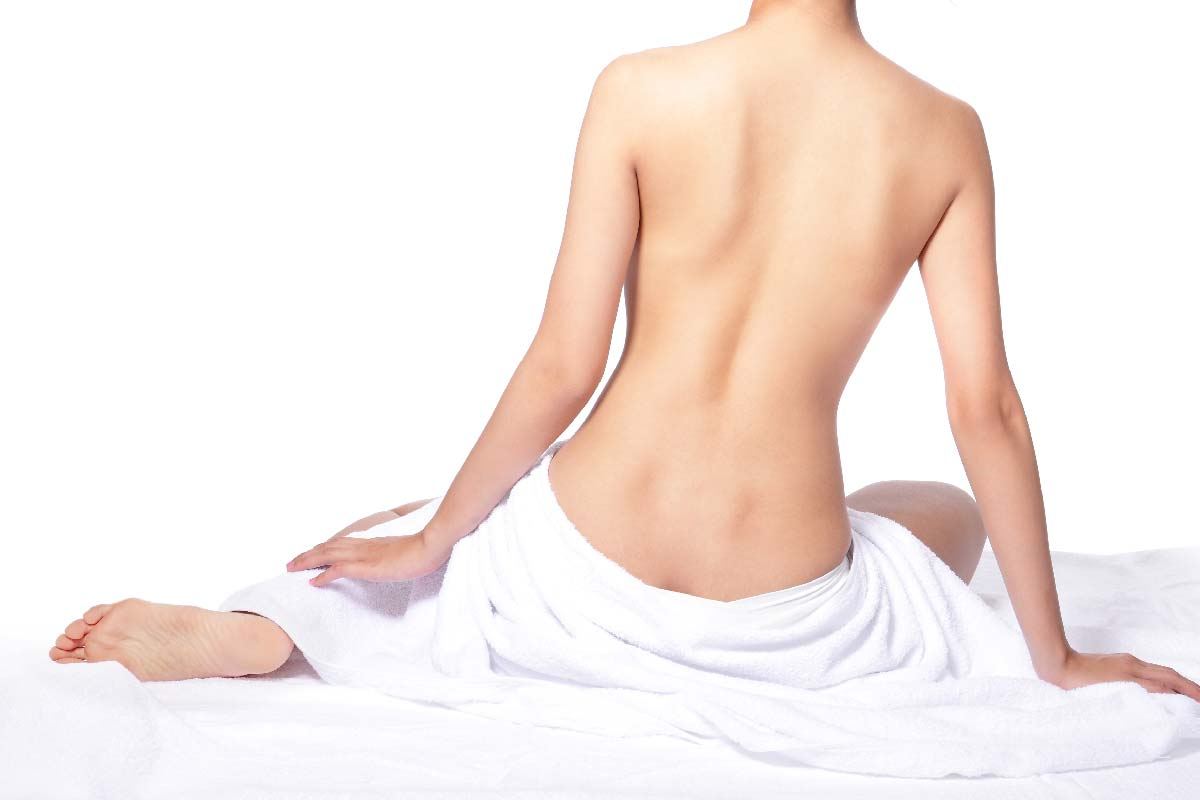
Why Lower Back Fat Is So Resistant
The most important thing I tell patients in consultation is this: spot reduction is not possible. No exercise targets fat removal from a specific area. Where your body stores and burns fat is governed by genetics, sex hormones, and cortisol — not by which muscles you work. For many people, the lower back and flanks are among the last areas to lose fat, and the first to regain it.
Several factors make this area particularly stubborn:
- Genetics: Fat distribution patterns are largely inherited. If your parents or siblings store fat in the lower back, you are more likely to as well. No lifestyle intervention changes your genetic fat distribution pattern.
- Hormonal influence: High cortisol levels (from chronic stress, poor sleep, or underlying conditions) promote fat storage around the trunk and lower back specifically. Oestrogen decline during perimenopause and menopause shifts fat distribution from the hips and thighs toward the trunk and back.
- Fibrous fat tissue: Back fat tends to be denser and more fibrous than abdominal fat, making it less metabolically active and harder to mobilise through calorie restriction alone.
- Sedentary posture: Prolonged sitting with poor posture weakens the core and paraspinal muscles, which can make the fat in this area appear more pronounced — even if the total volume is unchanged.
What Diet and Exercise Can Realistically Achieve
Before discussing surgical options, it is important to be clear about what conservative measures can and cannot do. They are valuable — but their limitations are real.
Exercise
Exercise reduces overall body fat and strengthens the muscles of the back and core. It will not selectively remove fat from the lower back, but it will improve body composition and tone the muscles that lie beneath the fat. The most effective exercises for this purpose are:
- Compound strength training — deadlifts, bent-over rows, and rack pulls build the paraspinal and latissimus muscles, improving the shape of the back and increasing metabolic rate.
- HIIT cardio — high-intensity interval training is more effective at reducing overall body fat than steady-state cardio for the same time investment.
- Core work — side planks, pallof press, and rotational exercises strengthen the obliques and reduce the visual impact of love handles by improving posture and muscle tone.
- Swimming and rowing — both are highly effective back-focused cardio options that build muscle while burning significant calories.
Nutrition
Fat loss requires a sustained caloric deficit. The quality of that deficit matters as much as the size of it. For patients trying to reduce back fat through diet, the priorities are:
- Adequate protein — 1.6–2.2g per kg of body weight daily preserves muscle mass during fat loss, so the result is fat reduction rather than general weight loss.
- Reduced refined carbohydrates and sugar — these cause insulin spikes that promote fat storage around the trunk.
- Anti-inflammatory foods — omega-3 fatty acids (oily fish, walnuts, flaxseed), vegetables, and whole grains reduce cortisol-driven fat storage.
- Consistent hydration — adequate water intake supports metabolic function and reduces water retention that can amplify the appearance of back rolls.
Diet and exercise are always the right starting point. But for patients who have maintained a healthy weight and lifestyle for an extended period and still have a localised back fat deposit, it is not a failure of effort. It is a genetic reality. That is the point at which a surgical consultation becomes appropriate.
Surgical and Medical Treatment Options
For patients with localised, resistant back fat deposits, several treatment options are available. The right choice depends on the size of the deposit, skin quality, whether skin tightening is needed, and patient preference regarding recovery. Here is how the main options compare:
| Treatment | Best For | Skin Tightening? | Recovery |
|---|---|---|---|
| Standard / 360° Liposuction | Good skin elasticity; single or multiple zones; larger volumes | Minimal | 5–7 days to desk work; 4–6 weeks compression garment |
| VASER Liposuction | Dense / fibrous back fat; patients wanting smoother results and better skin retraction | Moderate (ultrasound promotes retraction) | 5–7 days to desk work; less bruising than standard lipo |
| BodyTite (RFAL) | Mild-to-moderate skin laxity alongside fat; bra strap rolls; patients wanting combined fat removal and tightening | Significant (primary benefit) | 5–7 days to desk work; 6 weeks compression garment |
| Emsculpt Neo | Mild fat reduction combined with muscle building; patients not ready for surgery | None | No downtime |
| Morpheus8 Body | Skin texture improvement; mild fat reduction as secondary effect | Good (RF microneedling) | Minimal; 2–3 days redness |
Standard and 360° Liposuction
Liposuction is the most established surgical treatment for localised back fat. Small incisions — typically 3–4mm — are made in discreet locations, and a thin cannula is used to break up and aspirate the fat. For back and flank fat, I commonly perform 360° liposuction, treating the flanks, lower back, and waist in a single procedure to achieve a smooth, balanced circumferential result. It is performed as a day case under general anaesthesia.
VASER Liposuction
VASER liposuction uses ultrasound energy delivered through a small probe to selectively emulsify fat cells before they are removed, while preserving blood vessels, nerves, and connective tissue. For the back — which contains denser, more fibrous fat than the abdomen — VASER typically produces smoother results with less post-operative bruising and more consistent skin retraction. It is my preferred technique for the upper back and bra strap region in particular.
BodyTite
BodyTite uses bipolar radiofrequency-assisted lipolysis (RFAL). A small internal probe treats fat from the inside while a surface electrode simultaneously delivers radiofrequency energy to the overlying skin, producing measurable skin contraction. It is the appropriate choice when a patient has mild skin laxity alongside their back fat deposit — something common after significant weight loss or in older patients — where liposuction alone might not produce a tight enough result.
What Back Liposuction Involves
For patients considering surgery, here is a clear walkthrough of what to expect:
The procedure begins with tumescent infiltration — a dilute solution of local anaesthetic and adrenaline is injected into the treatment zones. This reduces bleeding significantly and allows the fat to be removed more precisely. For VASER, an ultrasound probe then emulsifies the fat layer. The fat is then aspirated through a cannula via small incisions placed in natural skin creases where they will be virtually invisible once healed.
A compression garment is fitted immediately after surgery and worn continuously for the first two weeks, then for a further four weeks during the day. This supports the healing tissue and encourages the skin to contract smoothly over the new contour.
Recovery Timeline
| Timeframe | What to Expect |
|---|---|
| Days 1–3 | Soreness, swelling and bruising in treated areas. Rest at home. Drain fluid is normal. |
| Days 5–7 | Most patients return to desk-based work. Driving typically from day 7. |
| Weeks 2–6 | Compression garment worn daily. Swelling gradually reducing. Light exercise from week 3. |
| 6 weeks | Initial result visible. Full exercise resumed. Compression garment discontinued. |
| 3–6 months | Final result as residual swelling fully resolves and skin retracts to new contour. |
Am I a Good Candidate?
Back liposuction produces the best results in patients who meet the following criteria. This is not an exhaustive list — individual assessment at consultation is always required — but it gives a useful initial guide.
- At or near your stable target weight — liposuction is a contouring procedure, not a weight-loss treatment
- Localised fat deposits that have not responded to sustained diet and exercise
- Good general health with no uncontrolled medical conditions
- Good-to-moderate skin elasticity (poor elasticity may require BodyTite for best results)
- Realistic expectations — surgery will improve your contour, not transform your body shape
- Not planning pregnancy in the near future (significant weight gain after liposuction affects results)
- Non-smoker, or able to stop smoking for at least 6 weeks before and after surgery
Risks and Considerations
All surgical procedures carry risk. A balanced understanding of what can go wrong is as important as understanding the potential benefits. The following risks apply to back liposuction specifically:
- Asymmetry: Minor differences between the two sides are the most common reason for revision liposuction. Careful pre-operative marking and technique minimise this risk, but perfect symmetry cannot always be guaranteed.
- Contour irregularities: Waviness or unevenness in the skin surface, more common with traditional liposuction than VASER. Most mild irregularities resolve within 6 months as swelling subsides.
- Seroma: Fluid collection in the treated area. More common with larger-volume procedures. Usually resolves without intervention; occasionally requires aspiration.
- Skin laxity: Patients with reduced skin elasticity may develop loose or crepey skin after fat removal. This risk is assessed during consultation and influences whether BodyTite is recommended instead.
- Numbness and altered sensation: Temporary numbness in the treated area is common. Permanent altered sensation is rare with careful technique.
- Infection and bleeding: Rare but serious complications requiring prompt treatment. Minimised by proper patient selection, surgical technique, and post-operative care.
Maintaining Your Results
Liposuction permanently removes fat cells from the treated area. The cells do not regenerate. However, remaining fat cells in other areas can still enlarge with significant weight gain, and some minor redistribution to adjacent areas can occur. Patients who maintain a stable weight after surgery — within approximately 5kg of their surgical weight — typically enjoy lasting results.
The practical steps for maintaining results long-term are straightforward:
- Maintain a stable, healthy body weight through consistent diet and exercise habits
- Prioritise compound strength training to preserve lean muscle mass and support metabolic rate
- Manage stress and prioritise sleep — both reduce cortisol-driven fat accumulation in the trunk
- Stay hydrated and minimise alcohol and ultra-processed food intake
Frequently Asked Questions
Can I target lower back fat with exercise alone?
No. Spot reduction — losing fat from one specific area through targeted exercise — is not physiologically possible. Exercise will reduce overall body fat and strengthen the muscles underneath, but it cannot selectively deplete fat deposits in the lower back. Where your body loses fat first is determined by genetics and hormones, not by which muscles you train.
Is back liposuction permanent?
Liposuction permanently removes fat cells from the treated area. The cells do not regenerate. However, remaining fat cells elsewhere in the body can still enlarge with significant weight gain. Patients who maintain a stable weight after surgery typically enjoy long-lasting results. Most patients who gain modest weight after surgery see it distributed more evenly rather than returning specifically to the treated zone.
What is the difference between VASER and standard liposuction for the back?
Standard liposuction uses mechanical disruption to break up fat before removal. VASER uses ultrasound energy to selectively liquefy fat cells while preserving surrounding tissues including nerves, blood vessels, and connective tissue. For the back — which has fibrous, dense fat — VASER typically achieves smoother results with less bruising and more consistent skin retraction. I prefer VASER for the upper back and bra strap region for this reason.
What is BodyTite and how does it differ from liposuction?
BodyTite combines radiofrequency-assisted lipolysis (RFAL) with fat removal. A bipolar radiofrequency probe treats fat from the inside while a surface electrode simultaneously tightens the overlying skin. It is particularly useful for patients who have mild skin laxity alongside their fat deposit — treating both issues in a single procedure. The skin-tightening effect is measurable and continues to improve over 3–6 months as collagen remodelling occurs.
How long does recovery from back liposuction take?
Most patients return to desk-based work within 5–7 days. A compression garment is worn for 4–6 weeks. Swelling is normal and initial results are visible at around 6 weeks. Final results — once all swelling has fully resolved — are typically seen between 3 and 6 months after surgery. Physical exercise is usually resumed progressively from week 3.
Am I a good candidate for back liposuction?
The best candidates are adults at or near their stable target weight with localised fat deposits that have not responded to diet and exercise. Good skin elasticity produces the best results from standard liposuction. Patients with mild skin laxity may achieve better outcomes with BodyTite. Patients who are significantly overweight, have uncontrolled medical conditions, or are planning pregnancy soon are not suitable candidates. The only way to confirm suitability is a consultation with physical examination.
Where does Mr Nassab perform back liposuction?
Mr Nassab operates at CLNQ Deansgate Hospital in Manchester city centre — a state-of-the-art boutique hospital providing the highest standard of surgical care. Consultations are also available in Knutsford, Cheshire. All procedures are performed by Mr Nassab personally. To arrange a consultation, call 0800 0584558 or use the contact form below.
Conclusion
Lower back fat and love handles are among the most genetically determined fat deposits on the body. For many people, sustained diet and exercise will improve overall body composition without ever fully resolving a discrete back fat deposit — and that is not a personal failing. It is anatomy.
The decision to pursue a surgical or medical treatment should come after a thorough assessment, with realistic expectations and a clear understanding of the procedure, the recovery, and the risks. In the right patient, back liposuction — whether standard, VASER-assisted, or BodyTite — produces reliable, permanent improvements to back contour that no other intervention can replicate.
If you have been considering treatment and would like an honest assessment of your options, the right starting point is a consultation — not a treatment decision.
Mr Nassab consults in Manchester (Deansgate Square) and Knutsford, Cheshire. Consultations include physical assessment, a discussion of which technique is appropriate for your anatomy, and a frank conversation about realistic outcomes. No hard sell — just a clinical assessment.
Related Reading
