Availability of cosmetic surgery in the NHS – BAAPS Presentation
Published by Reza Nassab
Medically reviewed: Last reviewed by Mr Reza Nassab, FRCS Plast —
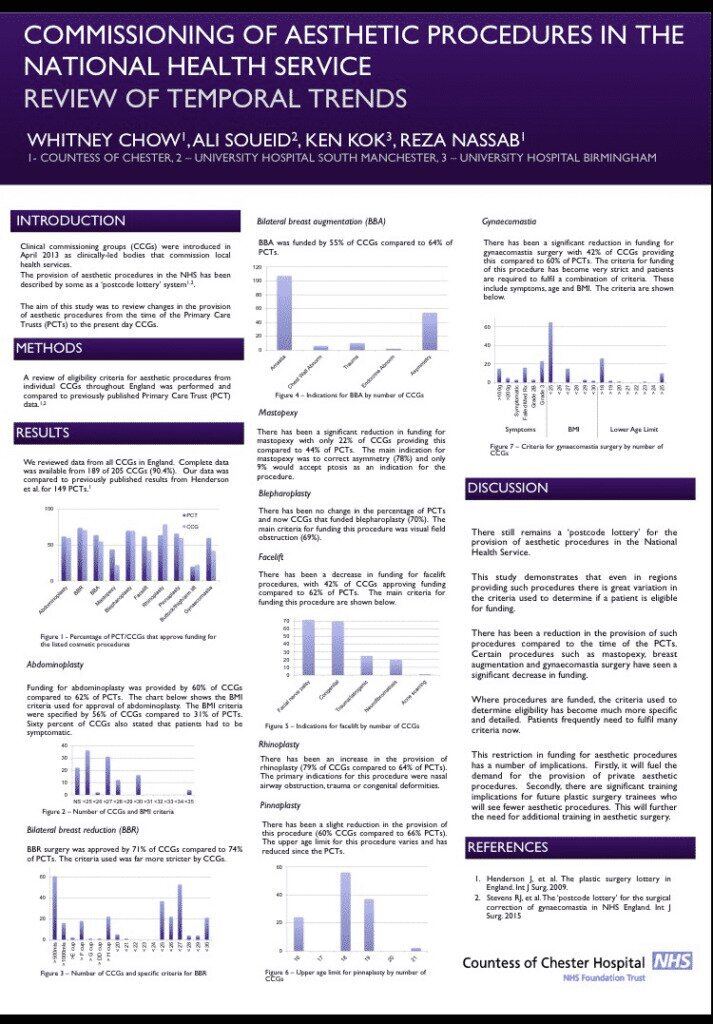
We present the findings from our recent study at the Annual British Association of Aesthetic Plastic Surgeons meeting at the CCR Expo, London.
The NHS is facing significant financial pressures. There exists a ‘postcode lottery’ for many procedures and treatments within the NHS. A previous study explored the provision of cosmetic surgery procedures on the NHS at the time of the primary care trusts (PCTs). The PCTs have now become Commissioning Care Groups (CCGs).
The aim of this study was to review the provision of cosmetic surgery in the NHS according to different CCGs in England.
There are just over 200 CCGs in England. There was widespread variation in which cosmetic surgery procedures were funded. This again shows there exists a ‘postcode lottery’ when it comes to cosmetic procedures within the NHS.
When compared to the previous study, there are tighter restrictions on who is eligible to have these procedures on the NHS.
‘Our paper shows that there is great variation in the provision of aesthetic procedures in the NHS. There has been reduction in funding for these procedures and eligibility criteria are becoming tougher. This is likely to fuel the demand for private procedures. There is also an impact on the training of future plastic surgeons’ says Mr Nassab, Consultant Plastic Surgeon in Chester.
What this means if you’re considering NHS treatment
Mr Reza Nassab, MBChB, MSc, MBA, FRCS (Plast) — Consultant Plastic Surgeon, GMC Specialist Register; Council Member, BAAPS
What struck me most carrying out this study was how wide the “postcode lottery” really is — whether a patient can access a procedure on the NHS often depends more on which commissioning group they live under than on their clinical need. That matters because several operations patients think of as “cosmetic” are in fact functional: breast reduction for back and neck pain, or the removal of excess skin after massive weight loss, can be genuinely life-changing yet are inconsistently funded. My advice to patients is to be realistic about NHS thresholds, to ask their GP specifically about local commissioning criteria, and to understand that being declined on the NHS is usually about funding policy, not about whether surgery would help them. Knowing the landscape helps people make an informed decision about NHS versus private care.
