Mr Reza Nassab Invited Speaker on Motiva Preserve at BAPRAS Breast Course
Published by Reza Nassab
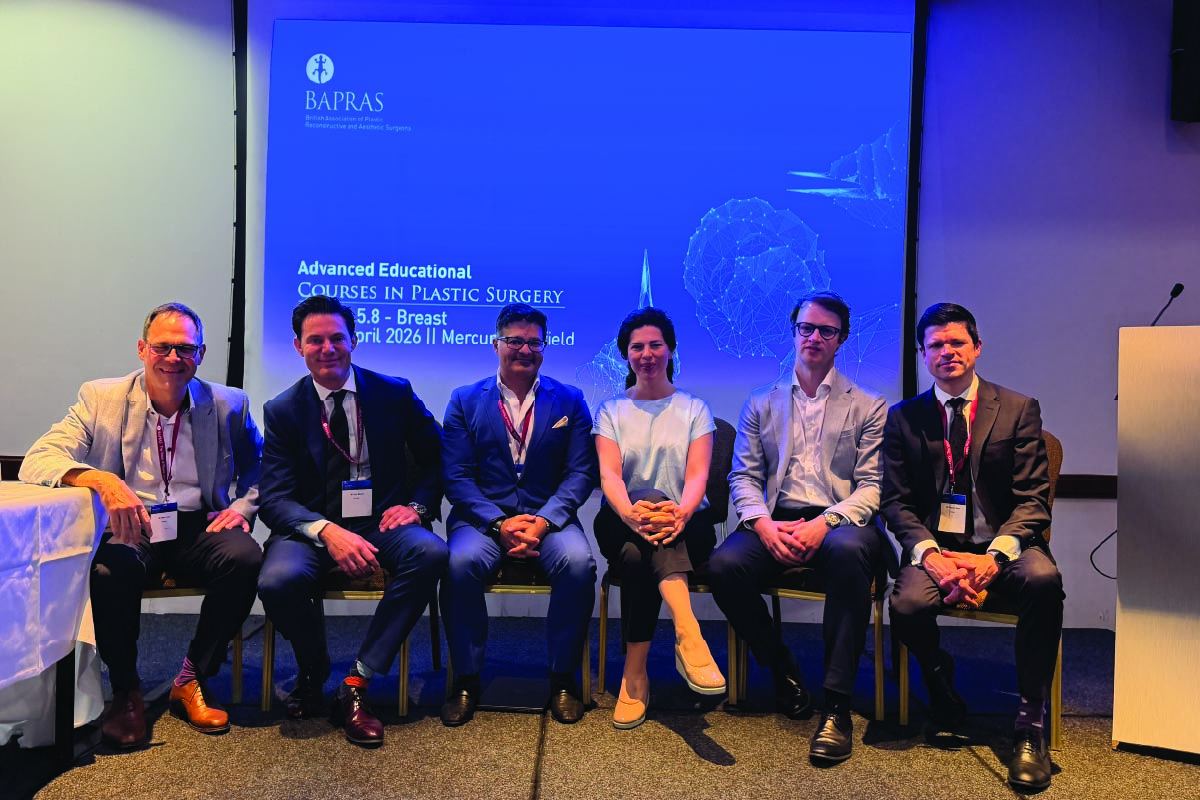
It is always a privilege to be invited to speak amongst peers at a national level at the BAPRAS Advanced Breast Course. I was invited as a speaker at the prestigious British Association of Plastic, Reconstructive and Aesthetic Surgeons (BAPRAS) Advanced Educational Course (AEC 5.8 – Breast), where I shared his personal clinical experience using the innovative Motiva Preservé technique.
We have been performing Motiva Preserve at Deansgate Hospital and one of only a few surgeons offering this advanced modern, tissue-preserving approach to breast augmentation in the UK. We have one of the largest series of patients having wide awake breast augmentation in the UK.
The BAPRAS Breast Meeting
The AEC 5.8 Breast is a highly regarded national course designed for plastic surgeons looking to refine their knowledge and stay at the forefront of developments in breast surgery.
Held over two intensive days, the course brings together leading experts from across the UK and internationally. It includes lectures, interactive discussions, and case-based learning covering the full spectrum of breast surgery—from reconstructive to aesthetic procedures. There were key speakers from all over the UK and including the organiser of the meeting Miss Rieka Taghizadeh.
Importantly, the course focuses on evolving techniques and emerging innovations, making it a key platform for sharing real-world clinical experience.
Why This Invitation Matter
Being invited to speak at BAPRAS is a significant professional recognition. The organisation represents the voice of plastic surgery in the UK, promoting education, research, and innovation within the specialty.
Faculty members are carefully selected based on:
- Clinical expertise
- Contribution to innovation
- Experience with emerging techniques
- Ability to provide meaningful, evidence-based insights
Mr Nassab’s invitation reflects his growing reputation in aesthetic breast surgery, particularly in advanced augmentation techniques that prioritise natural outcomes and patient safety.
What is Motiva Preservé?
Motiva Preservé is part of a new generation of breast augmentation techniques designed to minimise tissue disruption and optimise recovery. Unlike traditional approaches, which often involve more extensive dissection and muscle manipulation, Preservé focuses on preserving the natural breast anatomy as much as possible.
The philosophy behind Preservé aligns with a broader shift in plastic surgery toward:
- Less invasive techniques
- Faster recovery
- Reduced trauma to tissues
- More natural-looking results
From a surgical perspective, this technique combines refined implant placement with careful handling of soft tissues, aiming to reduce inflammation, improve healing, and maintain long-term breast integrity. During the talk, I presented anatomical landmarks such as the circum-mammary ligament which is a crucial part of the procedure. In providing the scientific basis for the procedure we can ensure future surgeons are able to perform this procedure safely.
Mr Nassab’s Presentation: Real-World Clinical Experience
At the BAPRAS meeting, I presented our personal series of Motiva Preservé cases performed at Deansgate Hospital in Manchester.
I spoke about my personal journey on using Preserve and real patient outcomes and practical surgical experience.
Key Areas Covered
Patient Selection
One of the most important aspects discussed was selecting the right patients for the Preservé technique.
Not every patient is suitable, and careful assessment is essential. Factors considered include:
- Breast tissue quality
- Skin elasticity
- Desired implant size
- Existing anatomy
This highlights a crucial point often overlooked in online discussions—technique selection should always be individualised.
Surgical Technique
Mr Nassab outlined how the Preservé approach differs from traditional augmentation techniques.
Key principles include:
- Minimising tissue disruption
- Preserving natural anatomical planes
- Reducing trauma to the breast and surrounding structures
- Precise implant positioning
These refinements may seem subtle, but they can have a meaningful impact on recovery and outcomes.
Early Outcomes
A major focus of the presentation was early clinical results from his case series. Our series of patients included 40 patients since the latter part of last year. This was the largest series of Motiva Preserve patients presented in the UK.
Patients undergoing Motiva Preservé at Deansgate Hospital demonstrated:
- Faster recovery times
- Reduced postoperative discomfort
- Early return to normal activities
- Natural breast movement and feel
While longer-term data is still evolving, early outcomes are encouraging and consistent with the theoretical advantages of tissue preservation.
Complication Profile
No surgical technique is without risk, and a balanced discussion of complications is essential.
Mr Nassab shared his experience regarding:
- Rates of capsular contracture
- Implant positioning stability
- Healing complications
- Patient satisfaction
Early data suggests that preserving tissue integrity may help reduce inflammatory responses, which could potentially lower complication rates—although long-term studies are still needed. The overall complication rates in our series has been 0%.
Why Tissue Preservation is the Future of Breast Surgery
The concept of tissue preservation is not unique to breast surgery—it reflects a wider trend across many surgical specialties.
In plastic surgery, the shift is particularly important because outcomes are judged not just on safety, but also on aesthetics and long-term natural results.
Benefits of Tissue Preservation
- Reduced trauma → less swelling and bruising
- Faster healing → shorter downtime
- Improved comfort → less postoperative pain
- Better long-term outcomes → more natural ageing
For patients, this translates into a more refined surgical experience.
Deansgate Hospital
All cases presented by Mr Nassab were performed at Deansgate Hospital, a state-of-the-art private hospital in Manchester. This facility has allowed access to innovative techniques such as the Preserve.
Having access to a modern surgical facility is essential when performing advanced techniques like Preservé. It allows for:
- High-quality anaesthetic care
- Advanced surgical equipment
- Strict safety protocols
- Optimal patient monitoring
This environment supports innovation while maintaining the highest standards of patient care.
Advancing Knowledge Through Shared Experience
One of the most valuable aspects of meetings like BAPRAS AEC is the opportunity to share real-world experience.
While research studies are essential, they often take years to produce results. In contrast, surgeon-led case series provide:
- Early insight into new techniques
- Practical learning points
- Honest discussion of challenges
- Peer-to-peer knowledge exchange
Mr Nassab’s presentation contributed to this collaborative learning environment, helping other surgeons understand how Preservé can be applied in clinical practice.
What This Means for Patients
For patients considering breast augmentation, developments like Motiva Preservé are highly relevant.
They represent a move towards:
- More personalised surgery
- Less invasive approaches
- Faster recovery
- More natural results
However, it is important to remember that no single technique is “best” for everyone. The key is choosing the right approach for the individual patient.
A Continued Commitment to Innovation
Mr Nassab’s invitation to speak at BAPRAS reflects his ongoing commitment to:
- Surgical innovation
- Evidence-based practice
- Continuous professional development
- Delivering the best possible outcomes for patients
By contributing to national and international discussions, he remains actively involved in shaping the future of aesthetic breast surgery.
Final Thoughts
Being invited to present at the BAPRAS AEC 5.8 Breast meeting is a significant professional achievement. It highlights not only expertise but also trust from peers within the plastic surgery community.
Sharing his experience with Motiva Preservé cases performed at Deansgate Hospital, Mr Nassab provided valuable insights into a technique that is likely to play an increasingly important role in the future of breast augmentation.
As plastic surgery continues to evolve, approaches that prioritise tissue preservation, patient safety, and natural results will become increasingly important—and it is clear that Mr Nassab is at the forefront of this movement.