Kylie Jenner's Breast Augmentation: A Plastic Surgeon's Expert Analysis
Published by Reza Nassab
Medically reviewed: Last reviewed by Mr Reza Nassab, FRCS Plast —
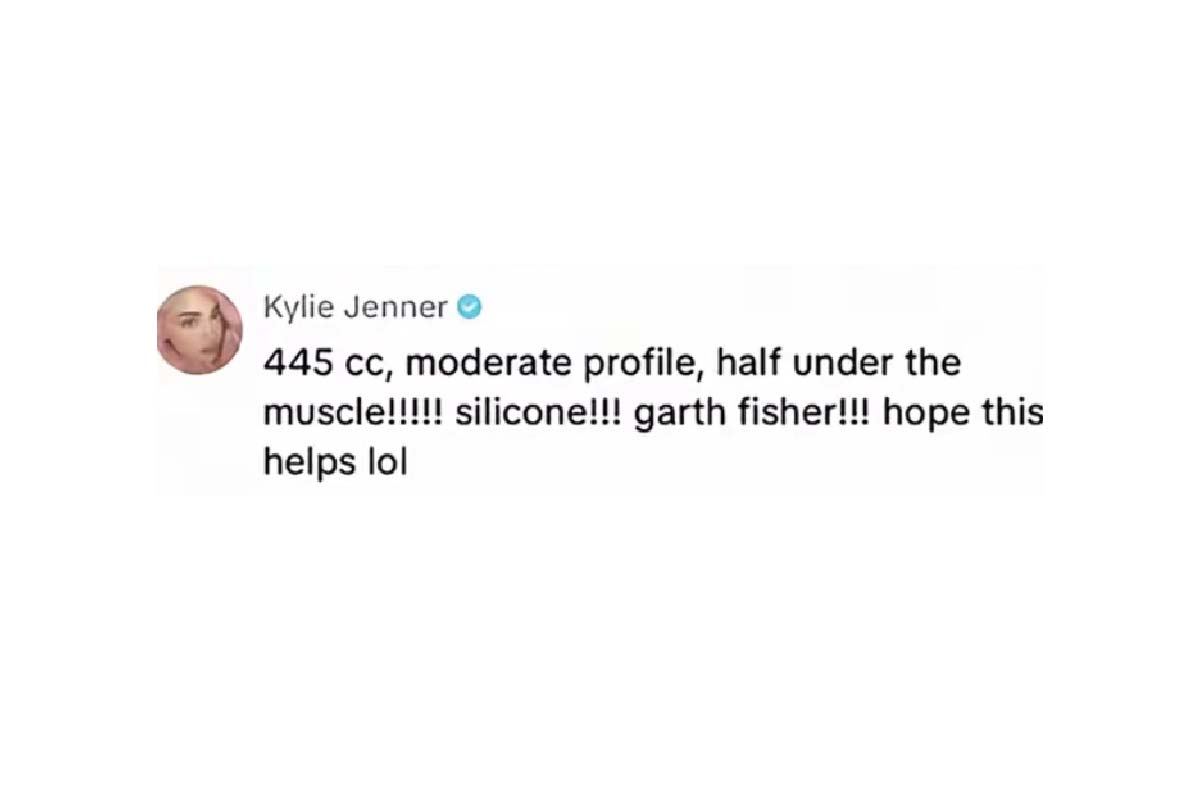
There has been a trending topic on TikTok called 'sharing is caring' which came from Kylie Jenner's comment about her boob job details. YouTuber Rachel Leary posted a clip asking Kylie for her boob job "secrets." Within hours, Kylie replied:
"445 cc, moderate profile, half under the muscle!!!!! silicone!!! garth fisher!!! hope this helps lol."
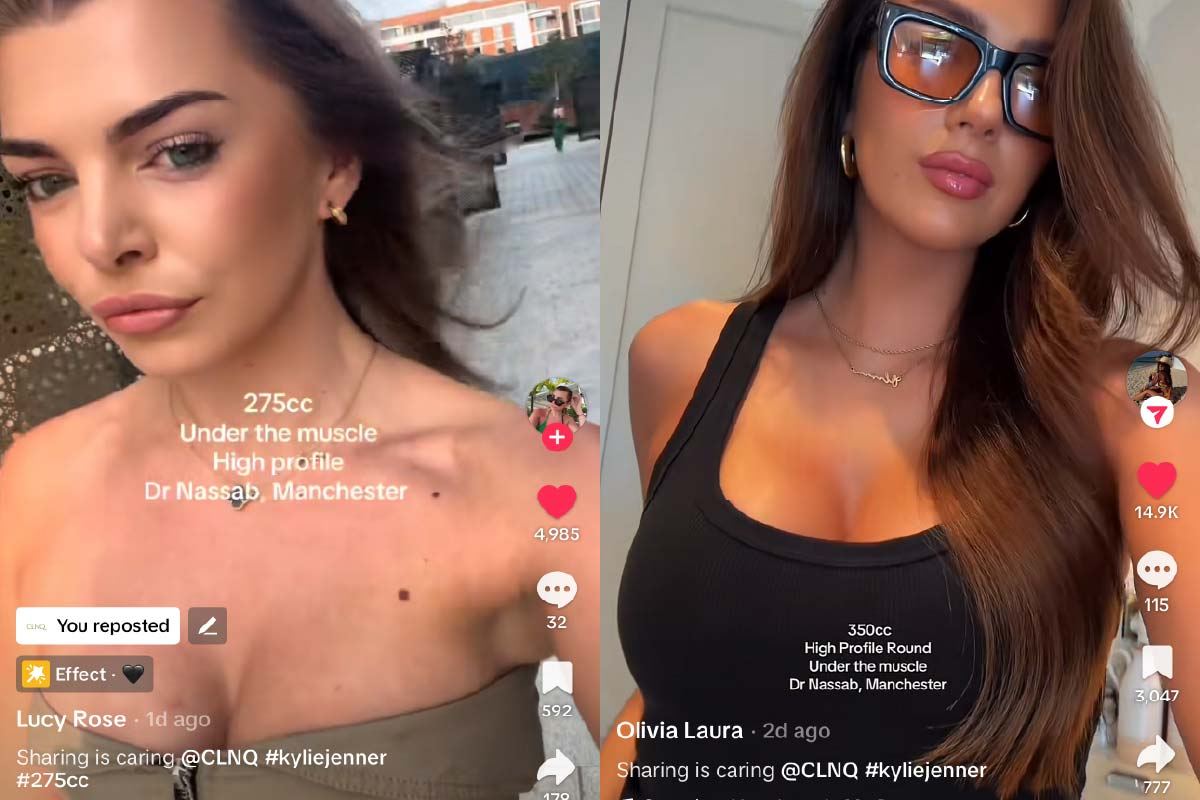
This marked the first time she publicly gave detailed information about her breast augmentation procedure — and sparked the TikTok 'sharing is caring' trend, with thousands of women sharing their own implant specifications. As a Consultant Plastic Surgeon who performs breast augmentation in Manchester and Cheshire, I want to do something Kylie's comment cannot: explain exactly what those numbers and terms mean, why they matter, and — critically — why the same specifications would produce a different result on a different patient.
What Kylie Jenner Actually Revealed
Kylie first admitted to having a breast augmentation in 2023 during The Kardashians TV show, saying she had it at 19 before her daughter Stormi was born. She shared regrets, urging: "wait until after having children" — noting her natural breasts were "beautiful" and "perfect" before the surgery.
Kylie's TikTok comment contained four pieces of technical information, each of which corresponds to a real surgical decision her surgeon made. Let us go through each one.
445cc — the volume
Breast implant volume is measured in cubic centimetres (cc). At 445cc, Kylie's implants are at the larger end of what most UK surgeons see in clinical practice. The 445cc breast implant is a large implant and is not suitable for everyone. Kylie Jenner had previously had breast implants and so when having a revision there was scope to increase the size. Choosing a 445cc implant for a primary or first-time augmentation should only be done where it is in proportion with the patient's frame, height, and breast anatomy.
The key measurement that governs how large an implant a patient can safely accommodate is not their bra size — it is their base width: the horizontal diameter of their natural breast footprint. An implant wider than the base width carries a higher risk of complications including palpability, rippling, and lateral displacement. You can read more about how implant size is measured in cc and what drives the right choice for different anatomies.
Moderate profile — the projection
The moderate profile breast implant is a more natural option — wider but with less forward projection. Profile describes how far an implant projects from the chest wall relative to its base width. There are typically four or five options depending on manufacturer: low, moderate, moderate-plus, high, and ultra-high. A moderate profile implant has a wider base and less forward projection than a high profile implant of the same volume, producing a broader, lower, more natural result. Two implants of identical volume in different profiles will look entirely different on the same patient.
Dual-plane placement — "half under the muscle"
Kylie's "half under the muscle" means a dual-plane technique. In a dual-plane augmentation, the upper portion of the implant sits beneath the pectoralis major muscle, while the lower portion sits directly beneath the breast tissue. This gives a natural upper-pole slope while providing adequate lower-pole fullness and a teardrop shape.
The main placement alternatives are:
- Subglandular (above the muscle): The implant sits beneath the breast tissue but above the muscle. Better for patients with adequate tissue coverage, but carries a higher rate of visible rippling in thin patients.
- Total submuscular (fully under the muscle): Less commonly used today. Can cause an 'animation deformity' — implants visibly move when flexing the chest.
- Subfascial: Beneath the pectoral fascia. Sits between subglandular and dual plane in terms of coverage and is used in specific anatomical cases.
Patients who have very little breast tissue or body fat will often benefit most from going under the muscle. Those who have some breast or fatty tissue may go over the muscle. The plane is always based on individual anatomy — there is no single correct answer.
Silicone implants
Silicone implants are the most commonly used implants in the UK. The alternative — saline implants — are rarely used here. In our practice, all patients receive silicone cohesive gel (sometimes called 'gummy bear') breast implants. Modern cohesive silicone gel implants feel closer to natural breast tissue, are more form-stable, and carry a lower visible rippling risk than saline in thin-tissued patients. The brands I work with — primarily Motiva and Mentor — use proprietary silicone formulations with strong safety profiles, CE marking, and long-term clinical data.
The surgeon
Kylie Jenner mentioned her surgeon Dr Garth Fisher. Dr Fisher has been featured on Keeping Up with the Kardashians numerous times and has operated on many Kardashian-Jenners. It is always good to have a recommendation for a surgeon — we are very fortunate to have several patients share our details with friends and followers on social media. In the UK, the important check is that your surgeon holds a place on the GMC Specialist Register for Plastic Surgery and is a member of BAAPS or BAPRAS.
Why Kylie's Specifications Would Look Different on You
This is the most important part of this article. The four data points Kylie shared are real. Her result is real. But if I used exactly those specifications on another patient, the result would be entirely different — and in many cases, not what they were hoping for.
The reason comes down to five anatomical variables that differ between every patient:
| Variable | Why it changes the result |
|---|---|
| Base width of the breast | Determines the maximum safe implant diameter. A narrower base cannot accommodate the same implant as a wider one without increasing complication risk. |
| Existing breast tissue volume | More tissue provides better coverage and softens the appearance of the implant. Less tissue means the implant has more influence over the final shape. |
| Skin quality and elasticity | Thin, less elastic skin is more prone to rippling and stretching over time, and has less tolerance for larger implants. |
| Inframammary fold (IMF) height | The fold position governs where the implant sits. A high fold may need releasing to achieve natural lower-pole fullness; an already-low fold limits implant size. |
| Nipple-to-fold distance | This measurement directly informs the ideal implant height and whether a breast lift may be needed alongside augmentation. |
"If I put the same implant in 10 different people, every single one will look different." The goal is to find the implant that produces your desired result — not to replicate someone else's.
What Do Our Patients Typically Choose?
In our practice, the majority of patients are seeking a natural-look breast enhancement. Data from our Manchester and Cheshire clinics gives a useful reference point for UK patients. While every case is individual, the following patterns are typical:
We do perform larger volume enlargements where they are appropriate, or in revision cases. We have started to see the 'Kylie Jenner effect' with patients coming and asking for the 445cc. However, you should not expect to look like Kylie Jenner simply by having the same breast implants. Her frame, previous augmentation history, and individual anatomy are all part of why those specifications produced that result for her.
The Kylie Jenner TikTok Trend — What It Gets Right and Wrong
Kylie's public reveal is part of a broader wave of celebrity openness where procedures and tweaks are candidly discussed. A number of people have taken to TikTok to share their own breast implant details — we have had patients of our own join the 'sharing is caring' trend and we are delighted to see that kind of openness. It helps people understand the procedures available and demystifies cosmetic surgery.
It is also helpful to have inspiration images to show your surgeon during a consultation — this allows us to understand your desired expectations. However, there are times when I have to sensitively explain that a specific result is unrealistic, often due to individual anatomy. For example, Kylie Jenner had previously had a breast augmentation and had a child. She will have a different result compared to someone who is 20 years old and has never had children, or someone aged 45 who has lost significant weight. Everyone is different.
The trend's significant problem is the implication that specifications are transferable. A screenshot of Kylie Jenner's implant size is not a prescription. Responsible surgeons always measure first and recommend second — never the other way around.
Risks Every Patient Should Know
A page that discusses breast augmentation without covering risks would not be genuinely helpful. The following are the primary risks every patient should discuss during their consultation:
- Capsular contracture: The body forms a natural fibrous capsule around any implant. In some patients this thickens and hardens, causing firmness and visible distortion. Rates are approximately 5–15% over 10 years and vary by technique. Treatment typically requires surgery. Learn more about recognising capsular contracture.
- Implant rupture: Modern cohesive silicone implants are durable, but a ruptured silicone implant often shows no symptoms (a 'silent rupture'). MHRA guidance recommends MRI screening from year 5 and every 2–3 years thereafter.
- Rippling and palpability: Visible or palpable implant edges, most common in thin-tissued patients with subglandular placement. Reducing risk requires careful implant and placement selection.
- Animation deformity: Implant movement visible during pectoral muscle flexion, occurring with dual plane or submuscular placement. Usually mild and well tolerated, but worth discussing with active patients who train their chest regularly.
- Changes over time: Pregnancy, breastfeeding, significant weight change, and natural ageing all affect how implants look. Most patients can expect to consider revision surgery within 10–20 years. See our guide to signs that implants may need replacing.
- BIA-ALCL: A rare lymphoma associated with certain textured implants. The risk with smooth implants is extremely low. Patients should be aware of the main symptom — persistent swelling around the implant — and seek prompt assessment if it occurs.
- What size and profile do your measurements suggest for my anatomy?
- Which placement technique do you recommend for me, and why?
- Which implant brand and surface type do you use, and what is the evidence for your choice?
- What is your personal capsular contracture rate?
- What does your revision policy cover, and for how long?
- Are you on the GMC Specialist Register for Plastic Surgery?
Frequently Asked Questions
Can I ask my surgeon to use the same implants as Kylie Jenner?
You can share the specifications as a reference point for discussion. A responsible surgeon will assess your measurements and tell you whether those specifications are anatomically appropriate for you. If they are not, they will explain why and what would achieve a comparable aesthetic result within the limits of your anatomy.
How much does 445cc actually look like?
Volume alone tells you very little about appearance. A 445cc implant on a patient with significant existing breast tissue may look like a modest increase. On a patient with very little natural tissue, the same implant would produce a dramatically different, much more augmented result. 3D simulation technology — which we use in consultations — is a far more useful planning tool than a cc number.
Is 445cc too big?
'Too big' is only defined relative to anatomy and patient goals. For some patients, 445cc is within safe limits and entirely appropriate. For others — particularly those with a narrow chest base width or limited tissue coverage — it would carry unacceptable risks of complications. The answer can only be given after a proper physical assessment. Any surgeon who quotes an implant size before measuring you has not done their job properly.
What is the difference between dual plane and going fully under the muscle?
Fully submuscular placement means the implant is covered entirely by the pectoralis muscle — this is less commonly performed today because it can cause animation deformity and often restricts natural lower-pole fullness. Dual plane — which Kylie's surgeon used — keeps the muscle over the upper portion while allowing the lower implant to sit beneath just the breast tissue, giving a more natural transition and lower-pole shape.
Is silicone safe?
Modern cohesive silicone gel implants have an extensive safety record. Large-scale prospective studies including the FDA core studies have found no systemic safety concerns with CE-marked and FDA-approved silicone gel implants. In the UK, MHRA-approved implants from reputable manufacturers are the standard of care. Patients should understand the distinction between systemic safety (well established) and local complication risks (real but manageable with good surgical planning).
How do I know if a surgeon is qualified to perform breast augmentation in the UK?
Look for a surgeon on the GMC Specialist Register for Plastic Surgery — not just General Surgery or another specialty. Membership of BAAPS (British Association of Aesthetic Plastic Surgeons) or BAPRAS (British Association of Plastic, Reconstructive and Aesthetic Surgeons) provides additional assurance. Under current UK regulation, any doctor can legally perform cosmetic surgery — specialist register status is the most important safety check a patient can perform before proceeding.
Where can I have a consultation for breast augmentation in Manchester?
Mr Nassab consults at our Manchester city centre clinic (Deansgate Square) and our Knutsford, Cheshire clinic. All consultations are with Mr Nassab personally — not a patient coordinator. Measurements, tissue assessment, 3D simulation, and a frank discussion of realistic outcomes are all included. Book via the contact form or by calling 0800 0584558.
Conclusion
Many people have been inspired by Kylie's decision to share her implant information — "445 cc, moderate profile, half under the muscle, silicone, Dr Garth Fisher." Her transparency helps demystify cosmetic surgery and gives patients considering a boob job a better starting vocabulary for their consultation.
The key message is that those implant details are unique to her. She will have had an in-depth discussion with her surgeon, and they will have planned and selected those implants together based on her specific anatomy, history, and goals. We always discuss the various implant options during your consultation and choose the right implant for you — not the right implant for someone else.
If this trend has prompted you to consider breast augmentation, seek a consultation with a GMC Specialist Registered plastic surgeon, ask the questions listed in this article, and let the recommendation come from your anatomy.
Mr Nassab consults in Manchester (Deansgate Square) and Knutsford, Cheshire. Consultations include measurements, tissue assessment, 3D implant simulation, and a personalised recommendation. Call 0800 0584558 or use the form below.
Related Reading
Mr Reza Nassab’s perspective
Social-media trends around celebrities’ surgery come and go, and I would always encourage caution about basing your own decisions on them. Trends can normalise a particular look, but what suits one person will not suit another, and much of what is seen online is edited. Rather than chasing a viral look, the best outcomes come from a result designed around your own anatomy and goals. If a trend has prompted you to think about surgery, treat it as a starting point for a proper, individualised consultation.
