Evidence Based Hype – Marketing and Evidence Behind Novel Aesthetic Devices
Published by Reza Nassab
Medically reviewed: Last reviewed by Mr Reza Nassab, FRCS Plast —
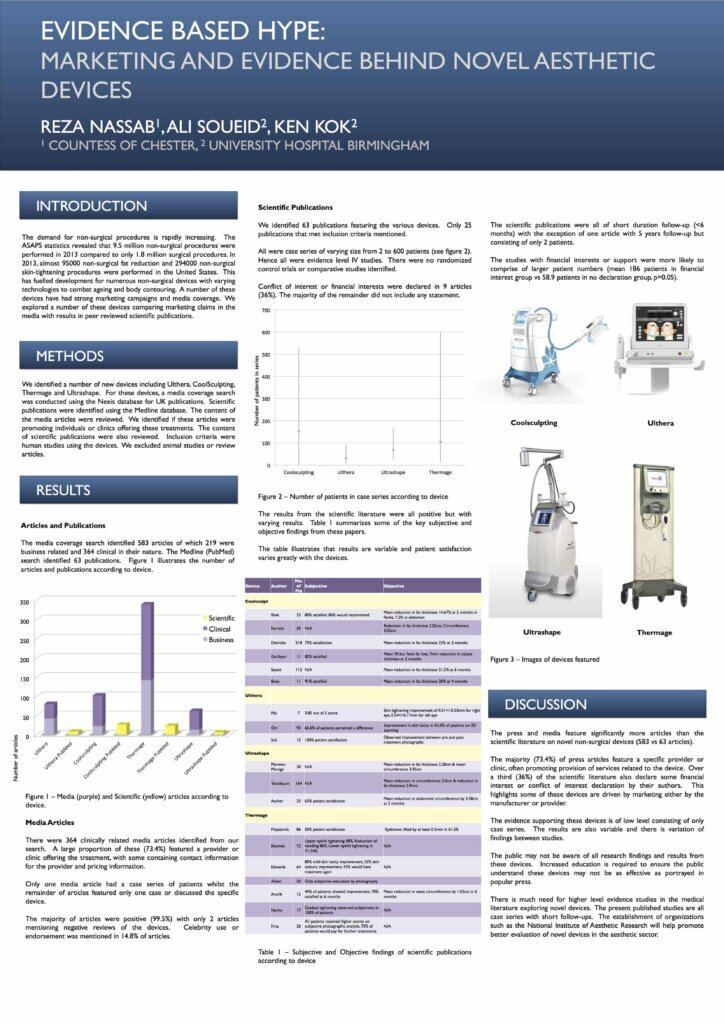
The demand for non-surgical procedures is rapidly increasing. The ASAPS statistics revealed that 9.5 million non-surgical procedures were performed in 2013 compared to only 1.8 million surgical procedures. This has fuelled development for numerous non-surgical devices with varying technologies to combat ageing and body contouring. A number of these devices have had strong marketing campaigns and media coverage. We explored a number of these devices comparing marketing claims in the media with results in peer reviewed scientific publications.
The press and media feature significantly more articles than the scientific literature on novel non-surgical devices (583 vs 63 articles).
The majority (73.4%) of press articles feature a specific provider or clinic, often promoting provision of services related to the device. Over a third (36%) of the scientific literature also declare some financial interest or conflict of interest declaration by their authors. This highlights some of these devices are driven by marketing either by the manufacturer or provider.
The evidence supporting these devices is of low level consisting of only case series. The results are also variable and there is variation of findings between studies. There is much need for higher level evidence studies in the medical literature exploring novel devices. The present published studies are all case series with short follow-ups.
There is a ‘evidence-marketing gap’ for novel aesthetic procedures and devices. The aim should be to provide more evidence to support the marketing claims of such procedures and reduce this gap.
Mr Reza Nassab’s perspective
The aesthetic field is full of new devices promising dramatic results with no downtime, and separating genuine advances from marketing hype is something I take seriously. Many novel devices have limited independent evidence, small studies funded by manufacturers, or effects that are real but modest and over-sold. My approach is to look for robust, independent data before recommending anything, and to be honest with patients about what a treatment can realistically achieve. Healthy scepticism protects patients from spending money on unproven treatments. See the evidence-based procedures I offer.
