Hooded Eyes: Causes, Treatments & Blepharoplasty Guide
Published by Reza Nassab
Medically reviewed: Last reviewed by Mr Reza Nassab, FRCS Plast —
Hooded eyes are one of the most common concerns I see in facial surgery consultations. Patients typically describe feeling that they look permanently tired, older than they are, or that their eyes have "disappeared" compared to earlier photographs. For some, the excess skin has begun to affect peripheral vision or creates daily discomfort.
This guide covers the anatomy and causes of hooded eyes, a critical clinical distinction that is often missed in online articles (the difference between excess skin and true ptosis), honest advice on what non-surgical treatments can and cannot achieve, and a detailed walkthrough of upper blepharoplasty — the surgical procedure that Mr Nassab performs regularly in Manchester and Cheshire.
What Are Hooded Eyes?
Hooded eyes are characterised by an excess of skin that droops over the upper eyelid crease, partially or fully obscuring it. This creates the appearance of a heavier, smaller, or more closed eye. The fold of skin sits between the brow and the lash line, reducing the visible lid platform.
It is worth noting that hooded eyes are not inherently a problem — they are a common and normal variation. Jennifer Lawrence, Blake Lively, and Taylor Swift are frequently cited examples of people with naturally hooded lids. For many patients, hooded eyes are simply a normal feature they have had since childhood. For others, the hooding has developed or worsened over time and causes genuine functional or cosmetic concern.
An Important Clinical Distinction: Dermatochalasis vs Ptosis
This is the section most articles on hooded eyes miss — and it is the most clinically important.
There are two distinct causes of heavy, drooping upper eyelids that look similar but require entirely different surgical approaches:
Dermatochalasis
Excess, redundant upper eyelid skin that droops over the lid crease. This is what most people mean by "hooded eyes." It is caused by skin laxity from ageing or genetics. Treated by upper blepharoplasty — removal of the excess skin.
True Ptosis
A low-lying eyelid margin caused by weakness or laxity of the levator palpebrae muscle. The lid margin itself sits too low — covering part of the pupil. Requires levator advancement, a different surgical technique to blepharoplasty.
Brow Ptosis
Descent of the brow below the orbital rim — which pushes additional skin onto the upper eyelid and creates apparent hooding. If the brow is low, operating on the eyelid skin alone may not produce the best result.
Combined Causes
Many patients have a combination of all three. Correctly identifying the relative contribution of each is what surgical assessment is for — and why a consultation involves much more than simply looking at the eyelids.
Performing a blepharoplasty on a patient with true ptosis — without correcting the levator — will not produce the expected result. Conversely, performing a brow lift on a patient whose primary problem is skin excess may over-correct the brow and produce an unnatural appearance. Careful assessment of all three components is the foundation of good upper eyelid surgery.
What Causes Hooded Eyes?
Hooded eyes can be present from birth or develop and worsen over time. The main causes are:
- Genetics: Many people inherit a tendency to hooded lids. If your parents or grandparents have hooded eyes, you are more likely to develop them — and they may be present and noticeable from a young age. Genetic hooding is normal anatomy, not a pathological change.
- Ageing and skin laxity: As we age, the skin around the eyes loses collagen and elastin, becomes thinner, and begins to sag. The orbital fat pads can also migrate. These changes cause previously non-hooded eyes to develop skin excess over the lid crease — typically becoming noticeable from the mid-40s onwards, though earlier in some patients.
- Brow descent: The brow naturally descends with age as the forehead soft tissues lose volume and the frontalis muscle weakens. A brow that sits below the orbital rim pushes excess skin onto the upper lid and significantly worsens the appearance of hooding.
- Loss of facial volume: Fat loss around the orbit and temple hollows the upper face, which can make eyelid skin redundancy more pronounced.
- Lifestyle factors: Smoking (degrades collagen), chronic sun exposure (UV accelerates skin laxity), poor sleep, and chronic stress can all accelerate the rate at which eyelid skin laxity develops.
- Medical conditions: Rarely, conditions affecting the levator muscle or its nerve supply can cause or contribute to eyelid drooping. These require medical assessment before any cosmetic intervention.
When Hooded Eyes Become a Functional Problem
For most patients, hooded eyes are a cosmetic concern. However, in more advanced cases the excess skin can overhang the lash line and encroach on the visual field — most commonly the upper and lateral field. This creates several practical problems:
- Obstructed peripheral vision: Significant upper lid hooding can reduce the superior visual field, which may affect activities such as driving. If vision is affected to a qualifying degree, blepharoplasty may be eligible for NHS funding following a formal visual field assessment.
- Forehead strain: Patients compensate for heavy lids by unconsciously raising their eyebrows using the frontalis muscle. Over time this causes chronic forehead tension and headaches.
- Skin irritation: Excess skin rubbing against the lash line or upper lid margin can cause irritation, dryness, and difficulty wearing contact lenses.
- Difficulty applying makeup: A limited, hooded lid platform makes eyeshadow and liner application significantly harder and more prone to smudging.
Non-Surgical Options for Hooded Eyes
Before considering surgery, it is important to understand exactly what non-surgical treatments can and cannot do. The honest answer is that no non-surgical treatment removes skin. What they can do is improve brow position, reduce puffiness, and slow the rate at which laxity develops.
| Treatment | What It Does | Realistic Expectation |
|---|---|---|
| Botox (brow lift) | Relaxes orbicularis to allow brow elevation | Modest improvement in mild hooding driven by brow descent. No effect on skin excess. Lasts 3–4 months. |
| Dermal fillers | Restore volume to the brow/temple | Can improve hollowing that exaggerates hooding. Not a direct treatment for skin excess. |
| Thread lift | Dissolvable threads to lift brow | Moderate short-term brow lift. Results last 12–18 months. More invasive than Botox, less reliable than surgery. |
| Retinol / eye creams | Support collagen production | Slow the rate of skin laxity. Cannot reverse existing redundancy. Useful for prevention and maintenance. |
| Makeup techniques | Create visual illusion of lifted lid | Immediate cosmetic improvement with no downtime. No physiological effect. |
For patients with mild hooding primarily driven by brow descent — particularly those in their 30s and early 40s — Botox is a reasonable starting point. For patients with established skin excess, it will be insufficient. The most important thing is an honest assessment of which problem is driving the appearance before any treatment is chosen.
Surgical Options for Hooded Eyes
Upper Blepharoplasty
Upper blepharoplasty is the surgical procedure specifically designed to address excess upper eyelid skin. It is the most commonly performed facial surgical procedure worldwide, with an excellent safety profile and high patient satisfaction when performed by an appropriately trained surgeon.
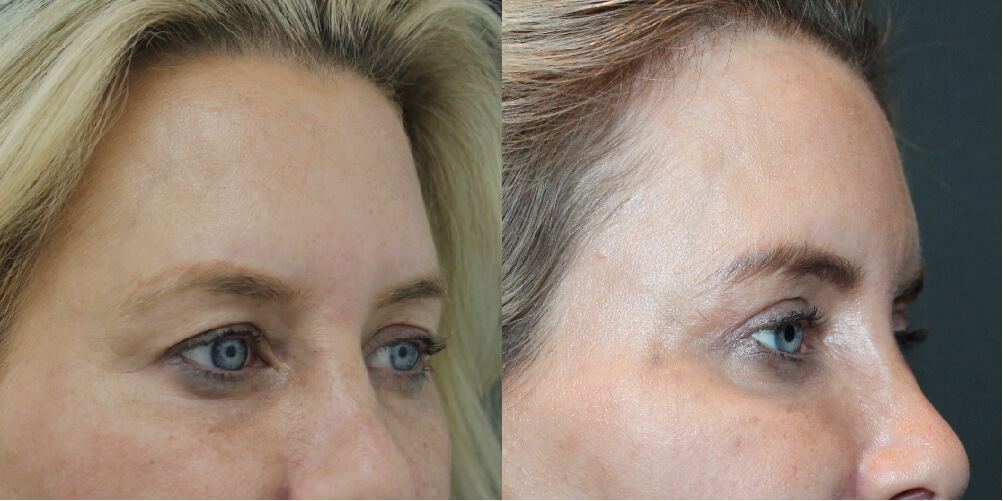
The operation involves removing a precisely measured ellipse of redundant skin — and in some cases a small amount of underlying orbicularis muscle or herniated orbital fat — from the upper eyelid. The incision is placed within the natural upper eyelid crease, so that once healed, the resulting scar sits within an existing skin fold and is virtually invisible.
How the Procedure Is Performed
Upper blepharoplasty is typically performed under local anaesthesia, with sedation available for patients who prefer it. General anaesthesia is used when blepharoplasty is combined with another procedure such as a facelift.
The key steps of the procedure are:
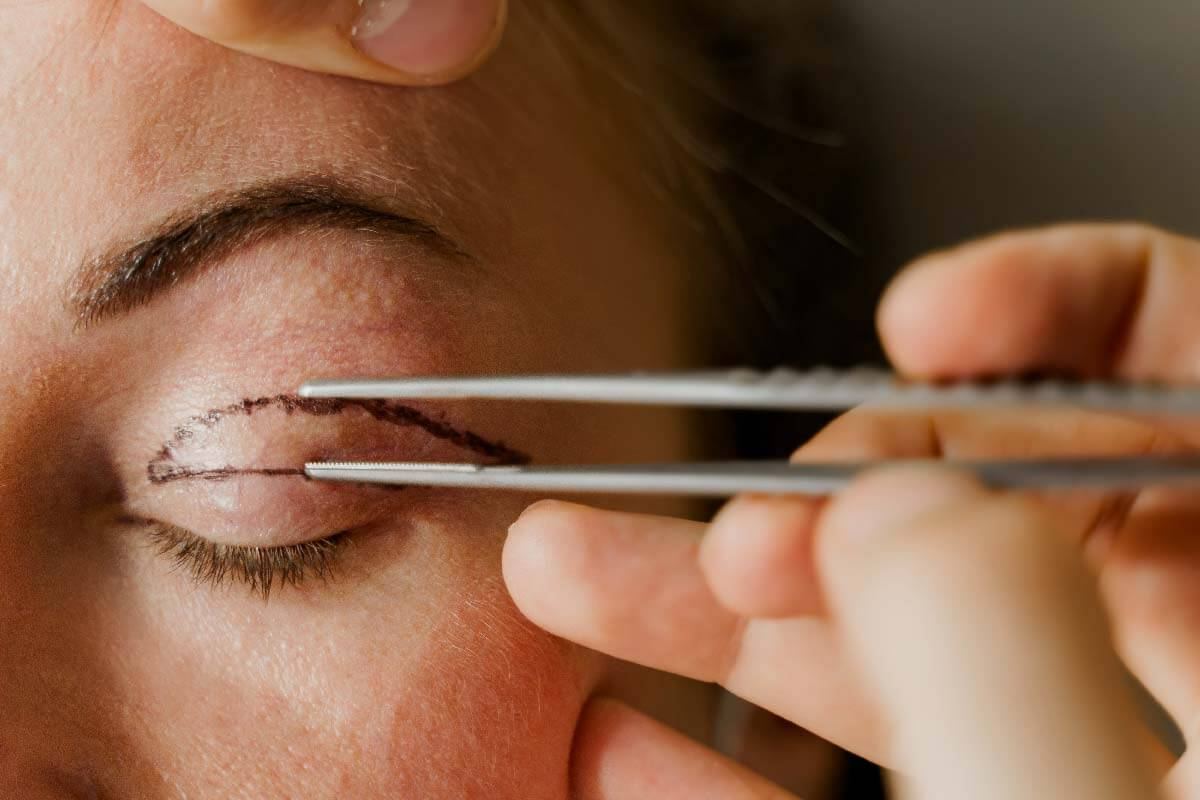
- Marking: With the patient sitting upright, Mr Nassab marks the precise amount of skin to be removed. This is a critical step — removing too little produces an inadequate result; removing too much risks inability to close the eye fully. The lower incision line sits in the natural crease; the upper line defines the amount of skin excision.
- Anaesthesia: Local anaesthetic is infiltrated into the eyelid. The area becomes numb within minutes. The patient is awake but completely comfortable.
- Skin excision: The marked ellipse of skin is removed. In some cases, a strip of orbicularis muscle is also excised to further open the lid platform.
- Fat management: If herniated medial fat pad is contributing to upper lid fullness or a heavy inner corner, this is conservatively reduced.
- Closure: The incision is closed with fine sutures, which are removed at 5–7 days post-operatively.
Recovery Timeline
| Timeframe | What to Expect |
|---|---|
| Day 1–2 | Mild-to-moderate swelling and bruising. Cold compresses helpful. Rest at home. |
| Days 5–7 | Sutures removed. Bruising beginning to yellow and fade. Most patients feel the worst is over. |
| Days 7–10 | Most patients comfortable returning to desk-based work or social activities with makeup. |
| Weeks 2–3 | Bruising largely resolved. Mild swelling and some tightness may persist. Light exercise resumes. |
| 6–8 weeks | Result clearly visible. Strenuous exercise fully resumed. Scar still pink and maturing. |
| 6–12 months | Scar fully matures to a fine, skin-coloured line within the natural crease. Final result established. |
Brow Lift
When assessment reveals that brow descent is a significant contributing factor to the hooded appearance, a brow lift may be recommended — either alone or combined with upper blepharoplasty. Treating eyelid skin without addressing a low brow can produce an incomplete result and may cause the brow to descend further post-operatively as the support of the excess skin is removed.
Several brow lift techniques are available, each appropriate for different degrees of descent and patient anatomy: endoscopic brow lift, temporal brow lift, direct brow lift, and coronal brow lift. The choice is made during consultation based on the amount of lift needed, hairline position, and patient preference regarding recovery and scar placement.
Combined Procedures
Many patients benefit from combining upper blepharoplasty with additional procedures in the same anaesthetic episode. Common combinations include upper and lower blepharoplasty (for patients with both upper lid hooding and lower lid bags), blepharoplasty with brow lift, or blepharoplasty as part of a full facelift. Combining procedures reduces total recovery time and overall cost compared to staging them separately.
Am I a Candidate for Blepharoplasty?
Upper blepharoplasty produces the best results in patients who meet the following criteria. Individual assessment at consultation is always required, but this gives a useful guide:
- Visible excess skin drooping over the upper eyelid crease — present at rest, not just on looking down
- The appearance bothers you consistently, not just occasionally
- Non-surgical options have either been tried or are unlikely to be sufficient given the degree of hooding
- Good general health with no uncontrolled conditions affecting wound healing or anaesthetic risk
- No active dry eye disease (this can be worsened by blepharoplasty if not identified beforehand)
- Realistic expectations — surgery restores a more open, rested appearance, not a dramatically different face
- Non-smoker, or able to stop smoking for 6 weeks before and after surgery
Risks and Considerations
Upper blepharoplasty has an excellent safety profile when performed by a trained surgeon with appropriate patient selection. The following risks are specific to this procedure and should be discussed at consultation:
- Bruising and swelling: Expected and temporary. Most resolves within 10–14 days. Significant bruising is more common in patients on blood-thinning medications, which should be stopped prior to surgery where safe to do so.
- Asymmetry: Minor differences between the two eyes are the most common reason for revision. Pre-existing asymmetry — which almost all faces have to some degree — may become more noticeable after surgery and is identified and discussed beforehand.
- Dry eyes: The most clinically important risk. Patients with pre-existing dry eye syndrome should be identified before surgery, as removing too much skin can worsen tear film instability and surface exposure. A thorough history and examination helps stratify this risk.
- Incomplete closure (lagophthalmos): If too much skin is removed, the eye may not close fully — causing corneal exposure and dryness. This is why conservative, precise excision with careful pre-operative marking is essential.
- Scarring: Blepharoplasty incisions are concealed within the natural eyelid crease and typically heal to a fine, nearly invisible line. Hypertrophic or widened scarring is uncommon but can occur.
- Infection: Rare. Minimised by proper technique and post-operative antibiotic eye drops where indicated.
- Need for revision: A small percentage of patients require minor revision — most commonly for minor asymmetry or incomplete correction — typically performed under local anaesthesia.
Slowing the Progression of Hooded Eyes
For patients who do not yet need surgery, or who want to maintain results after blepharoplasty, the following measures are supported by evidence for preserving periorbital skin quality:
- Daily broad-spectrum SPF 30+ applied to the periorbital area — UV is the primary environmental driver of collagen degradation.
- Topical retinol used consistently from the 30s onwards supports collagen synthesis and slows the rate of skin laxity development.
- Hyaluronic acid and peptide eye creams maintain skin hydration and support the extracellular matrix.
- Stop smoking — the single most impactful lifestyle change for preserving skin elasticity.
- Quality sleep and stress management — chronic cortisol elevation promotes collagen breakdown and tissue oedema around the eyes.
Frequently Asked Questions
What is the difference between hooded eyes and ptosis?
Hooded eyes from skin excess (dermatochalasis) and hooded eyes from ptosis are different conditions that look similar. Dermatochalasis is excess skin drooping over the lid — treated by blepharoplasty. True ptosis is a low-lying eyelid margin caused by levator muscle weakness — treated by levator advancement, a different operation. Getting the diagnosis right is critical, as operating on the wrong problem produces poor results. Brow ptosis — descent of the brow — is a third contributor that requires separate assessment.
Can Botox fix hooded eyes?
Botox can provide a modest improvement in hooded eyes caused primarily by brow descent. By relaxing the depressor muscles below the brow, it allows the frontalis to elevate the brow slightly, creating more visible upper eyelid space. However, Botox does not remove skin. If the primary problem is redundant eyelid skin — which it is for the majority of patients presenting with this concern — Botox will produce minimal improvement. It is best used in younger patients with mild hooding and good skin quality.
Will the NHS treat hooded eyes?
The NHS may fund upper blepharoplasty if hooded eyelid skin causes a clinically significant visual field defect — assessed formally by a Goldmann or Humphrey visual field test, typically carried out by an ophthalmologist. Purely cosmetic hooded eyes are not funded. If your hooding has progressed to the point where you notice peripheral vision loss or regularly compensate by raising your brows, it is worth asking your GP for an ophthalmology referral to assess whether functional surgery criteria are met.
How is upper blepharoplasty performed?
Upper blepharoplasty is performed under local anaesthesia as a day case. The incision is placed within the natural upper eyelid crease. Excess skin — and in some cases underlying fat — is removed. The incision is closed with fine sutures removed at 5–7 days. The procedure takes 45–90 minutes. Patients are awake throughout but completely comfortable. The key to a natural-looking result is precise pre-operative marking to determine exactly how much skin can safely be removed.
How long does recovery from blepharoplasty take?
Bruising and swelling are expected for 10–14 days. Sutures are removed at 5–7 days. Most patients return to desk-based work within 7–10 days and feel comfortable in public. Strenuous exercise is avoided for 3 weeks. The result is clearly visible at 6–8 weeks once swelling has settled. The scar matures fully over 6–12 months to a fine line concealed within the natural eyelid crease.
Do I need a brow lift as well as blepharoplasty?
This depends entirely on your brow position relative to the orbital rim, assessed during consultation. If the brow has descended significantly, treating the eyelid skin alone may not produce the best result — and in some cases can cause the brow to drop further after surgery as the "scaffold" effect of the excess skin is removed. Some patients need both procedures; others need only one. This is one of the most important assessments in upper eyelid surgical planning.
How long do blepharoplasty results last?
Upper blepharoplasty results typically last 8–12 years, sometimes longer. The removed skin does not grow back. However, ageing continues and new laxity can develop over time. Sun protection, not smoking, maintaining a stable weight, and consistent skincare all help extend the result. Many patients who had surgery in their late 40s or 50s feel they may want a minor revision or complementary treatment in their 60s.
Where does Mr Nassab perform blepharoplasty?
Mr Nassab performs upper blepharoplasty at CLNQ Deansgate Hospital in Manchester city centre. Consultations are available in Manchester (Deansgate Square) and Knutsford, Cheshire. All procedures are performed by Mr Nassab personally — not by a registrar or junior surgeon. To book a consultation, call 0800 0584558 or use the contact form below.
Conclusion
Hooded eyes are common, normal, and — when they cause concern — very effectively treated. The key to a good outcome is accurate diagnosis: identifying the relative contributions of eyelid skin excess, true ptosis, and brow descent before any treatment is chosen. Performing the wrong procedure on the wrong problem is the most common source of disappointing results in upper eyelid aesthetics.
For mild hooding, non-surgical options — Botox, fillers, and consistent skincare — are a reasonable starting point. For established skin excess causing cosmetic or functional concern, upper blepharoplasty is the only intervention that directly addresses the problem. It is a well-tolerated, day-case procedure with an excellent track record and results that typically last a decade or more.
If you would like an honest assessment of your eyelid anatomy and the options most appropriate for you, the starting point is a consultation — not a treatment decision.
Mr Nassab consults in Manchester (Deansgate Square) and Knutsford, Cheshire. Consultations include a full assessment of upper eyelid anatomy, brow position, and a frank discussion of what is — and is not — achievable with surgery or non-surgical treatment.
Related Reading
Mr Reza Nassab’s perspective
Hooded eyes — where excess upper-eyelid skin drapes over the crease — can be a natural feature you were born with or develop with age as the skin loses elasticity and the brow descends. Where it is a cosmetic concern, or heavy enough to affect the field of vision, an upper blepharoplasty (eyelid lift) removes the excess skin for a refreshed, more open eye, sometimes combined with a brow lift if the brow position contributes. It is a precise, delicate procedure best done by a surgeon experienced around the eye. I assess the eyelid and brow together at consultation to plan the right approach.
