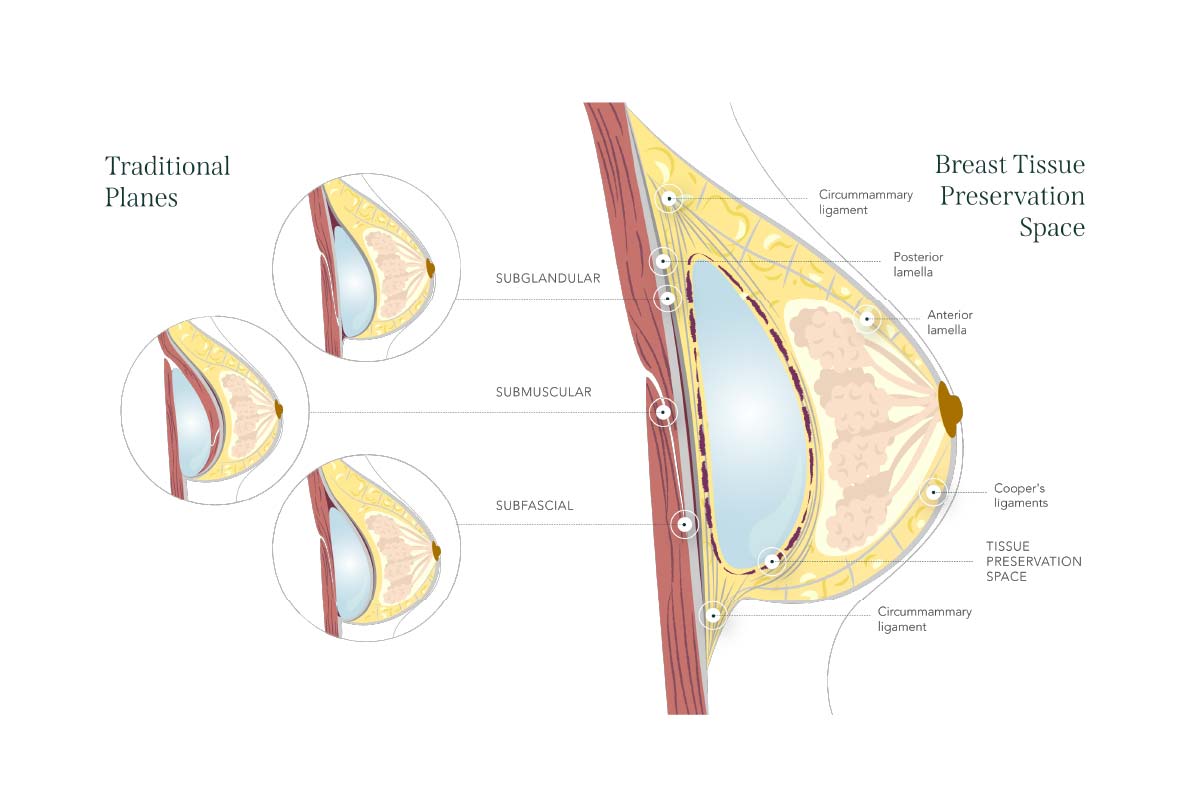
Preserve, like any breast augmentation surgery, may result in
potential complications, although these are uncommon. The main complications
following breast enlargement include:
Bleeding and haematoma formation
A haematoma is a collection of blood that may form in the pocket of the implant,
and this may require surgery to wash the pocket and stop any bleeding.
Infection
The risk of infection is rare. You will normally be given some antibiotics
during the procedure to reduce this risk further. Most infections occur soon
after surgery, although they may happen many years after the initial surgery as
well. If the infection is severe, then the breast implant may need to be
removed. The cavity is then washed and closed. Usually, we would then need to
wait a number of weeks to months before replacing the implant.
Scarring
There will be a scar from the incision to insert the breast implant. The scar is
most often placed in the crease beneath the breast. Scars can sometimes become
raised or lumpy, which is referred to as a hypertrophic or keloid scar. This may
need further treatment in the form of silicone dressings or creams and possibly
a course of steroid injections.
Change in Nipple Sensation
Most women will notice an alteration in the sensation in the nipple following
breast augmentation. Most often, there is reduced sensation, although some women
may notice increased sensitivity after breast enlargement. This is often
temporary, but some permanent changes may occur.
Asymmetry
All breasts have some degree of asymmetry, and even after breast augmentation,
there may be some minor degree of asymmetry. There are occasions when minor
asymmetries preoperatively may be exaggerated postoperatively. There may also be
differences in terms of nipple position after breast enlargement.
- Implant Extrusion
- Implant Rupture
- Gel Bleed
- Capsular Contracture
The main long-term complication with breast implants is the formation of a
capsular contracture. When an implant is placed into the breast, the body forms
a thin capsule around it. In some women, this capsule can become thickened and
cause discomfort and distortion of the breast. This may require further surgery,
and the risk of it recurring is high if you have already had a capsular
contracture.
Changes with Time
When you age or have children, there will be changes in your breast shape and
volume. Generally, the skin loses its elasticity and thins, resulting in
drooping of the breast, known as breast ptosis. This may require an uplift
procedure or mastopexy to correct. Thinning of the skin and
tissues covering the breast implant may result in the implant becoming palpable,
showing signs of rippling or wrinkling.